
Roof Lantern or Rooflight for Your Extension?
A flat-roof extension can feel dramatically different depending on what happens overhead. The decision between a roof lantern or rooflight affects far more than the amount of daylight in the room: it influences ceiling height, views, ventilation, privacy, solar gain and the overall architectural character of the space.
Both can transform a kitchen extension, orangery, garden room or contemporary renovation. The right choice depends on the proportions of the roof, the style of the property and how you plan to use the room throughout the year.
Roof lantern or rooflight: what is the difference?
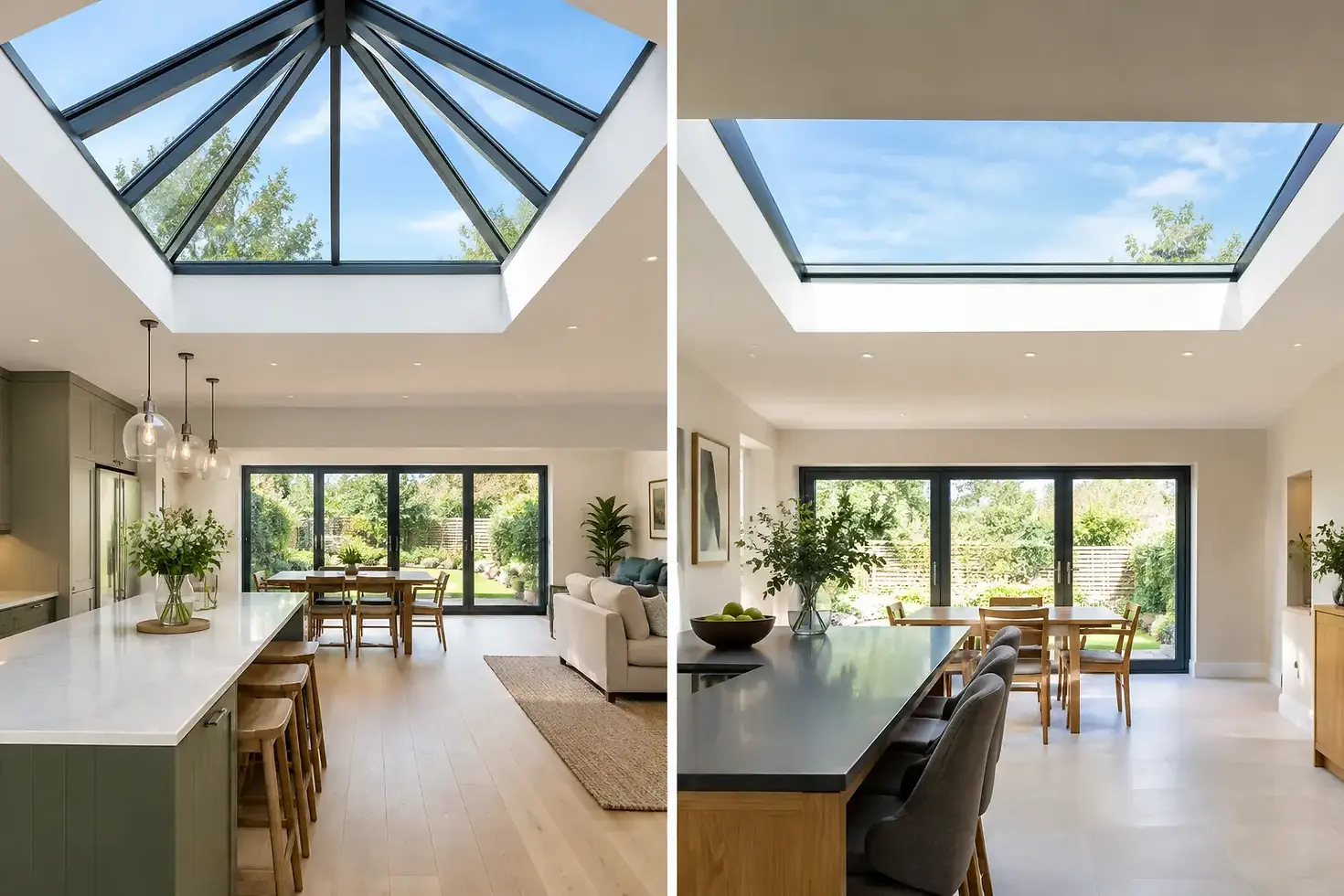
A rooflight is typically a glazed unit set directly into a flat or low-pitch roof. It can be fixed, manually opening or electrically operated, and is usually designed with a slim profile that sits close to the roofline. Internally, this creates a clean, uninterrupted ceiling opening with a direct view of the sky.
A roof lantern is a raised glazed structure, formed from multiple panes of glass held within aluminium rafters and a central ridge. Rather than sitting flush with the roof, it projects above it. This creates a sense of height and volume inside the extension, with light entering from several angles.
The distinction may sound simple, but it has a significant effect on the finished room. A contemporary single-storey extension with a crisp, minimal roofline may suit a large flat rooflight beautifully. A more traditional extension, or a room where drama and architectural presence are central to the brief, may benefit from the shape and depth of a lantern.
When a roof lantern is the stronger choice
A roof lantern is often selected when the aim is to make a room feel larger, brighter and more considered. Its raised design draws the eye upwards, giving an otherwise low-ceilinged extension a greater feeling of space. This can be especially effective over a dining table, kitchen island or seating area where the lantern becomes a focal point rather than simply a source of light.
Because a lantern admits daylight through angled panes as well as the horizontal glass above, it can distribute light deeper into the room. In a broad extension with a solid rear wall or limited side glazing, this can make a noticeable difference to how evenly the space is lit.
Aluminium is particularly well suited to roof lantern construction. Its strength allows for slender rafters and refined sightlines, while its durability supports the larger glazed spans associated with premium extensions. A well-designed aluminium lantern can complement sliding doors, bi-fold doors and fixed glazing below, creating a coordinated architectural finish.
There are trade-offs. The raised profile is visible from outside, which is desirable on many properties but may not suit every planning context or architectural style. It also has more framework than a flat rooflight, so it will not provide the completely open sky view that some homeowners prefer. A lantern requires careful specification too: poor-quality systems with bulky sections or limited thermal detailing can undermine the clean appearance and performance expected from a premium project.
When a flat rooflight makes more sense
A flat rooflight is a natural fit for minimalist extensions, particularly where the objective is a near-frameless roof opening. Seen from inside, a large fixed rooflight can create a striking plane of glass above the room, bringing daylight into the centre of the layout without adding visual complexity.
It is also a practical choice where external height must be kept to a minimum. On properties close to neighbouring homes, beneath first-floor windows or within more sensitive settings, the low profile of a rooflight can help the extension remain discreet. This does not remove the need to check planning requirements, but it can make the design easier to accommodate.
Flat rooflights work exceptionally well in groups. Two or three aligned units can echo the lines of a kitchen island, roof overhang or sliding door arrangement, introducing rhythm without making the ceiling feel busy. A long, narrow rooflight can also bring daylight along a galley kitchen or through the centre of a deeper extension where side windows are not possible.
The main consideration is the quality of the glass and frame. The flatter, simpler form of a rooflight places greater emphasis on crisp detailing, accurate installation and a well-finished internal reveal. Large panes can also be heavy, so roof structure, access and safe handling should be addressed early in the build programme.
Daylight is not the same as comfort
More glass does not automatically produce a better room. South- and west-facing roofs can receive intense sun, particularly in late spring and summer. Without the right glass specification, a bright extension can become uncomfortably warm at the times when it should be most enjoyable.
Solar-control glazing can reduce excess heat gain while retaining excellent natural light. The best specification depends on orientation, glazed area, shading from nearby buildings or trees, ceiling height and the amount of vertical glazing elsewhere in the extension. A room with wide south-facing sliding doors and a large roof lantern has very different requirements from a north-facing kitchen with a single rooflight.
Thermal performance matters through winter too. Quality double or triple glazing, thermally broken aluminium profiles and well-designed seals help limit heat loss and reduce the risk of cold spots around the roof opening. Whole-system performance is more meaningful than a single headline figure. The glass, frame, upstand, roof build-up and installation detail must work together.
Glare is another factor that is easy to overlook during the design stage. A rooflight directly above a television, home-working desk or polished kitchen worktop may produce unwanted reflections. Sometimes the answer is a different position, a smaller opening or a glass specification tailored to the room's use, rather than simply adding more glazing.
Ventilation, access and everyday use
Fixed glazing is often the cleanest visual option, but opening rooflights can be valuable in kitchens and busy family rooms. Warm air naturally rises, so an opening unit at high level can help release heat and support cross-ventilation through doors or windows below.
Manual opening rooflights may suit easily accessible locations, while electrically operated units are more convenient in higher ceilings or hard-to-reach positions. Rain sensors, wall switches and remote controls can make opening rooflights a practical part of the room rather than a feature that is rarely used.
For roof lanterns, ventilation is commonly provided through the vertical doors or windows around the extension rather than the lantern itself. This can work very well, particularly where large sliding doors open onto the garden. However, it is worth considering how the room will perform on still, hot days when external doors may not be open.
Cleaning should be considered with the same practicality. Flat rooflights with self-cleaning glass coatings are generally straightforward to maintain, though their external faces remain difficult to reach without suitable access. Lanterns have more glass sections and framework, so specify a system with durable powder-coated aluminium and clean junctions that do not collect dirt unnecessarily.
Proportion, placement and the roof structure
The most successful roof glazing looks as though it belongs to the extension. It should be proportioned to the room below and positioned around how the space is furnished. A roof lantern centred over the full extension can look formal and balanced, while one aligned above a dining zone may better suit an open-plan layout.
For flat rooflights, consider the view from below. A rooflight positioned to frame a tree canopy or open sky will feel very different from one that looks directly towards a neighbouring wall. In a long extension, placing daylight closer to the darkest part of the plan often has more impact than simply centring it geometrically.
Structural design comes first. Roof openings require properly sized trimming members, and a lantern's raised form may influence roof falls, drainage and the detailing of the insulated upstand. Bringing the glazing supplier, builder and designer into the conversation early helps avoid compromises later, such as oversized internal supports, awkward ceiling junctions or insufficient clearance for opening elements.
Planning and specification checks
Many rooflights and roof lanterns can fall within permitted development rights, but this is not guaranteed. Listed buildings, conservation areas, leasehold properties, previous planning conditions and the scale or position of the extension can all affect what is acceptable.
Building Regulations are equally relevant. The roof glazing must meet applicable standards for thermal performance, safety glazing and structural integrity. Where there is a risk of someone falling through the glass, the product must be suitable for that location and use. For projects with an existing flat roof, it is also sensible to assess whether the roof construction can support the proposed unit before making a final selection.
A tailored specification should cover more than dimensions and frame colour. Confirm the glass make-up, solar-control performance, opening method, upstand requirements, internal finish, drainage approach and warranty responsibilities. These details are where a premium installation earns its value.
Choosing with confidence
Choose a roof lantern when you want architectural height, a traditional orangery influence or a strong central feature that fills the room with light from multiple directions. Choose a rooflight when you prefer a low-profile, contemporary finish, uninterrupted sky views or a design that needs to stay visually discreet from outside.
There is no universal winner. The best roof glazing is the one that responds to the room, the orientation and the way you live in it. With experienced advice and a carefully specified aluminium system, that overhead opening can become the detail that gives an extension its most memorable sense of light and space.


Comments