
Thermally Broken Aluminium Windows Explained
A large glazed opening should make a room feel brighter and more connected to the garden, not leave the perimeter of the room feeling cold on a January morning. That is the practical difference thermally broken aluminium windows are designed to make. They retain the crisp, slender profiles associated with aluminium while addressing the material’s natural tendency to conduct heat.
For homeowners, architects and builders, the term is more than a technical label. It affects comfort, energy performance, condensation risk and the freedom to specify larger panes without compromising the standard of the building envelope. The detail matters, particularly on extensions, self-builds and architect-led renovations where glazing is often a defining part of the design.
How thermally broken aluminium windows work
Aluminium is exceptionally strong, durable and well suited to narrow frames. On its own, however, it transfers heat readily. In a conventional non-thermally broken profile, warmth from the internal face of the frame can travel through the aluminium to the colder external face. This reduces insulation at the frame and can make its inner surface cooler.
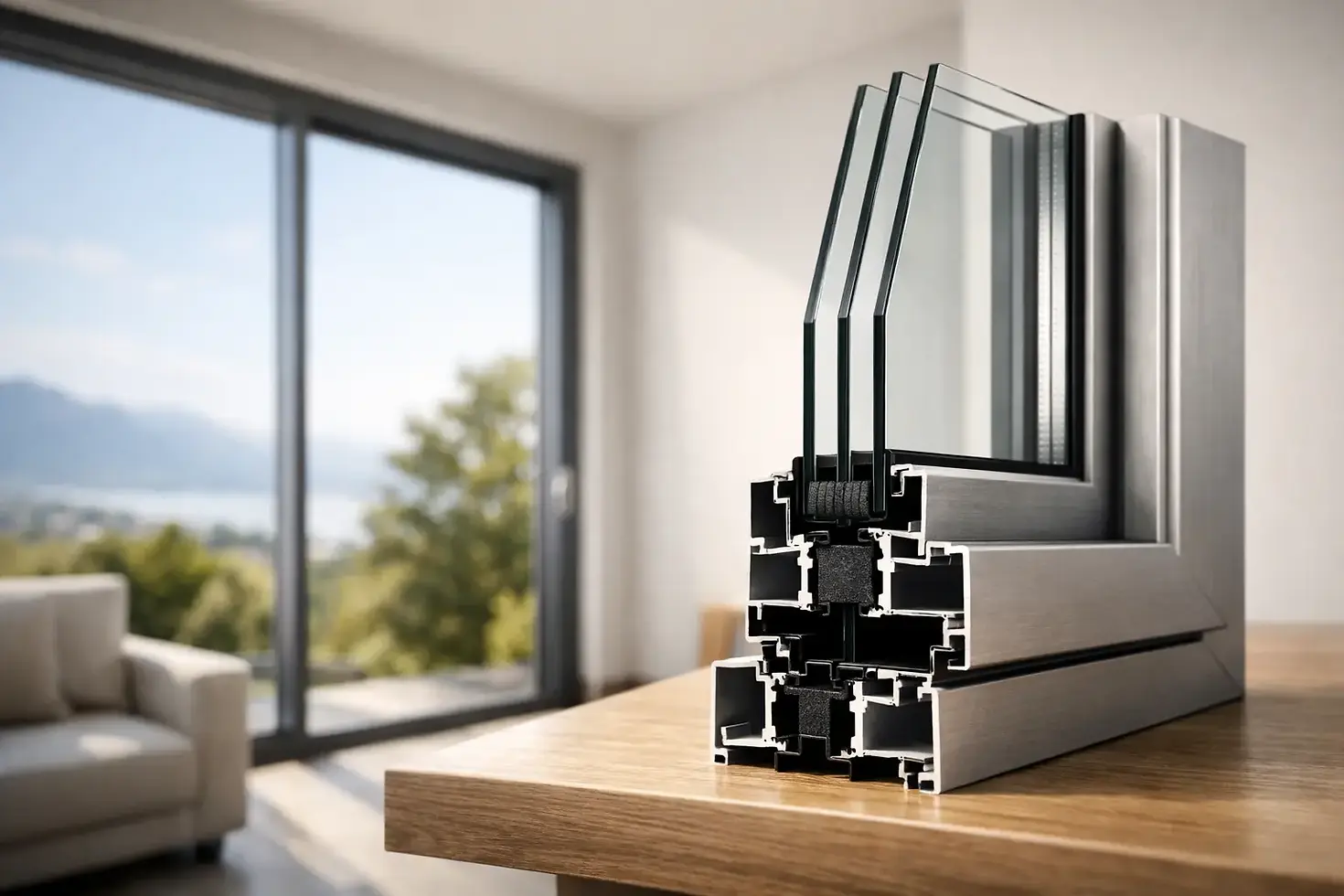
A thermal break interrupts that route. It is usually a highly insulating polyamide section fitted between the internal and external aluminium profiles. The inner and outer faces remain structurally connected, but they are no longer a direct metal-to-metal bridge for heat. Better systems may use wider thermal breaks, insulated chambers or carefully designed gaskets to further improve performance.
The result is a frame that works with, rather than against, the glazing unit. It is one reason modern aluminium can now be a serious option for energy-conscious homes, not only for commercial façades or contemporary statement projects.
Why the frame is only part of the answer
It is tempting to compare windows on a single headline number, but a thermally broken frame does not automatically guarantee the same result from every finished window. Thermal performance depends on the complete assembly: frame, glass, edge spacer, seals, opening configuration and installation.
The U-value measures heat loss. A lower value indicates better insulation, but it is worth confirming what is being quoted. A centre-pane value describes the glass alone. A whole-window U-value includes the frame and is the more useful figure when comparing like-for-like products for a project. Ask whether the stated value applies to the exact size, configuration and glazing specification being considered.
Double glazing remains a strong choice for many refurbishment projects, while triple glazing can be valuable where very low U-values, exposed locations or a higher-performance fabric are priorities. Triple glazing is not automatically the best answer in every opening. It adds weight, can affect sightlines and may change solar gain and cost. A carefully specified double-glazed thermally broken aluminium window can be the better-balanced solution where slender proportions and budget are equally important.
The glass specification also shapes how a room feels. Low-emissivity coatings help retain internal warmth, warm-edge spacer bars reduce heat transfer around the perimeter of the sealed unit, and solar-control glass can limit overheating on strongly south- or west-facing elevations. These choices need to be considered together rather than added as isolated upgrades.
Comfort, condensation and everyday performance
Thermal breaks improve more than calculated energy figures. By keeping the internal surface of the frame warmer, they help reduce the conditions in which condensation can form. This is especially relevant in kitchens, bathrooms and busy family homes, where indoor humidity rises through cooking, showering and drying clothes.
No window can solve a ventilation issue on its own. Persistent condensation may still point to excess moisture, inadequate extract ventilation or poor air circulation. Yet a cold frame gives moisture an easier surface on which to settle. A well-designed thermally broken system, correctly glazed and installed, helps create a more forgiving internal environment.
Aluminium’s stability also supports long-term performance. Unlike some materials, it does not swell, rot or require regular repainting. Quality powder-coated finishes provide a durable surface in a broad range of colours, from subtle heritage shades to deep contemporary tones. For coastal properties or highly exposed sites, the finish and hardware specification deserve particular attention, as environmental conditions can be demanding.
Design freedom without bulky frames
The appeal of aluminium has always been visual as well as practical. Its strength supports slender sections and generous glazed areas, allowing more light and clearer views than many alternative materials can achieve at equivalent dimensions. Thermal technology means this design freedom no longer has to be treated as a trade-off against insulation.
For contemporary extensions, thermally broken casement, tilt and turn or fixed-light windows can create a disciplined grid of fine sightlines. They pair naturally with aluminium sliding or bi-fold doors, giving a project a consistent language across openings. Fixed panes can be particularly effective where the objective is an uninterrupted view, with opening lights placed strategically for ventilation.
They are not limited to ultra-modern houses. Slim aluminium systems can be specified in traditional proportions, with bars, stepped profiles and carefully selected colours that sit comfortably alongside period brickwork or within a heritage-inspired scheme. Planning restrictions and conservation requirements may influence what is appropriate, so the visual specification should be assessed early rather than treated as a final finish decision.
What to compare before choosing a system
When comparing thermally broken aluminium windows, start with the intended opening rather than a generic product brochure. A wide fixed picture window, a side-hung casement in an exposed elevation and a first-floor tilt and turn window each place different demands on the system.
Consider the whole-window U-value alongside air permeability, water tightness and resistance to wind loading. These ratings are particularly relevant on coastal plots, tall buildings and open rural sites. Ask how the system is drained, how its seals are arranged and whether the proposed glazing thickness is compatible with the performance being promised.
Sightlines should be reviewed using drawings for the actual window layout. The visible frame dimension can change significantly where mullions, transoms, opening sashes and trickle vents are introduced. A simple elevation is often more revealing than a headline claim about slim frames.
Security should also be integral to the specification. Look for appropriate locking, secure glazing arrangements and hardware suited to the opening type. In a premium project, the handle finish, hinge position and opening action are not minor details. They influence daily use as much as the appearance of the frame.
Finally, treat installation as part of the product. Even an excellent window can underperform if it is poorly packed, inadequately sealed or positioned without regard to insulation continuity. The interface between frame, cavity closer, insulation and external weathering must be planned carefully. This is particularly important when replacing older windows, where existing reveals may conceal uneven construction or limited space for making good.
When aluminium is the right choice
Thermally broken aluminium windows are often the strongest fit where clean lines, larger panes and low maintenance are high on the brief. They suit glazed extensions, self-builds, modernisations and homes where doors, roof glazing and windows need to work together as one considered package.
They may be less appropriate where an authority requires a very specific traditional material or where the budget cannot accommodate a premium, bespoke system. In those circumstances, the right decision is not to force aluminium into the scheme, but to weigh appearance, planning requirements, performance and lifespan honestly.
At Cor-Line Systems, this conversation begins with the building, the openings and the desired finish rather than a one-size-fits-all window schedule. The most successful specification is usually the one that has resolved practical details early: how the windows will open, how the elevation will be divided, how much solar gain the room receives and how the installation will meet the surrounding construction.
A thermally broken aluminium window earns its place when it does not call attention to its technology. It should simply give the home sharper views, steadier comfort and a frame that continues to look considered long after the project is complete.


Comments