
Best Entrance Door Features for a Premium Home
- 3 days ago
- 6 min read
A front door has a more demanding job than almost any other element of a home’s exterior. It is the first detail visitors see, the threshold used every day, and a key part of the building envelope. The best entrance door features therefore need to do more than create a strong first impression. They should bring together security, thermal performance, weather resistance and a design that feels right for the property.
For a premium renovation, self-build or architect-led scheme, choosing an entrance door is rarely just a matter of selecting a colour from a brochure. The proportions of the opening, the surrounding glazing, the level of privacy required and the way the door will be used all influence the right specification.
Best entrance door features to specify first
Security designed into the whole door set
A secure entrance door is not defined by its lock alone. Real protection comes from the combined strength of the door slab or panel, frame, hinges, locking points, cylinder and installation method. These parts need to work as one tested system rather than a collection of individual upgrades.
Look for multi-point locking that engages at several positions around the frame, together with high-quality cylinders designed to resist common attack methods. Hinge-side protection is equally worthwhile, particularly on outward-opening doors, where security bolts or dedicated hinge guards can help prevent the leaf from being forced from its frame.
For projects where security certification is a priority, ask whether the complete door set has been tested to recognised standards such as PAS 24. This can be particularly relevant for new homes, developments and properties seeking Secured by Design requirements. It also provides useful reassurance that performance has been assessed beyond visual appearance.
Glazing needs the same consideration. If you are incorporating sidelights, fanlights or a glazed section within the door, specify suitable safety glass and consider laminated options where added security is required. A large glazed panel can make an entrance feel light and welcoming, but it should never become the weakest point in the design.
Thermal efficiency that suits the wider build
A well-specified entrance door helps to reduce draughts and maintain a more comfortable internal temperature, especially in an exposed location or open-plan hallway. Aluminium is exceptionally durable, but it must be engineered with an effective thermal break to prevent unnecessary heat transfer through the frame.
The construction of the door panel matters as much as the frame. Insulated aluminium panels, carefully designed seals and a precise threshold arrangement all contribute to the finished performance. Ask for the door’s U-value as a complete unit, rather than focusing only on the centre of the panel. This gives a more realistic picture of how the door will perform once installed.
There is, however, a balance to strike. The lowest possible U-value is not automatically the sole measure of a good entrance door. A specification should also account for the property’s build-up, exposure, desired sightlines and the practical demands of the opening. For example, a wide pivot-style door may require different engineering considerations from a conventional single-leaf front door.
A threshold that works in everyday life
Thresholds are easily overlooked during design discussions, yet they affect warmth, accessibility and protection from wind-driven rain. A low threshold can create a neater transition and make the entrance easier to use for pushchairs, wheelchairs and anyone with limited mobility. It must still be appropriate for the location and detailed correctly to manage water.
On a sheltered entrance, a sleek, low-profile solution may be entirely suitable. On a coastal property or an exposed elevation, the door and threshold may need more substantial weathering measures. The surrounding drainage, finished external levels and any canopy should be considered early, rather than treated as installation details to resolve at the end.
Weather resistance for the British climate
Rain, fluctuating temperatures and strong winds place constant demands on an external door. Premium aluminium systems are valued for their stability, corrosion resistance and low-maintenance finish, but quality manufacturing and correct fitting remain essential.
A properly engineered entrance door should have durable gaskets, effective drainage paths and seals that maintain consistent contact when the door is closed. Poor alignment can compromise all of these elements, causing draughts, difficult operation or water ingress. This is one reason bespoke doors should be measured, specified and installed with care, particularly where the opening is large or the property is not perfectly square.
Powder-coated aluminium offers an extensive choice of colours while avoiding the regular repainting associated with some timber doors. It is a practical choice for busy homes, but it still benefits from occasional cleaning with mild soapy water to remove surface dirt and airborne deposits. Homes near the sea may need more frequent maintenance due to salt in the atmosphere.
Design features that give an entrance real presence
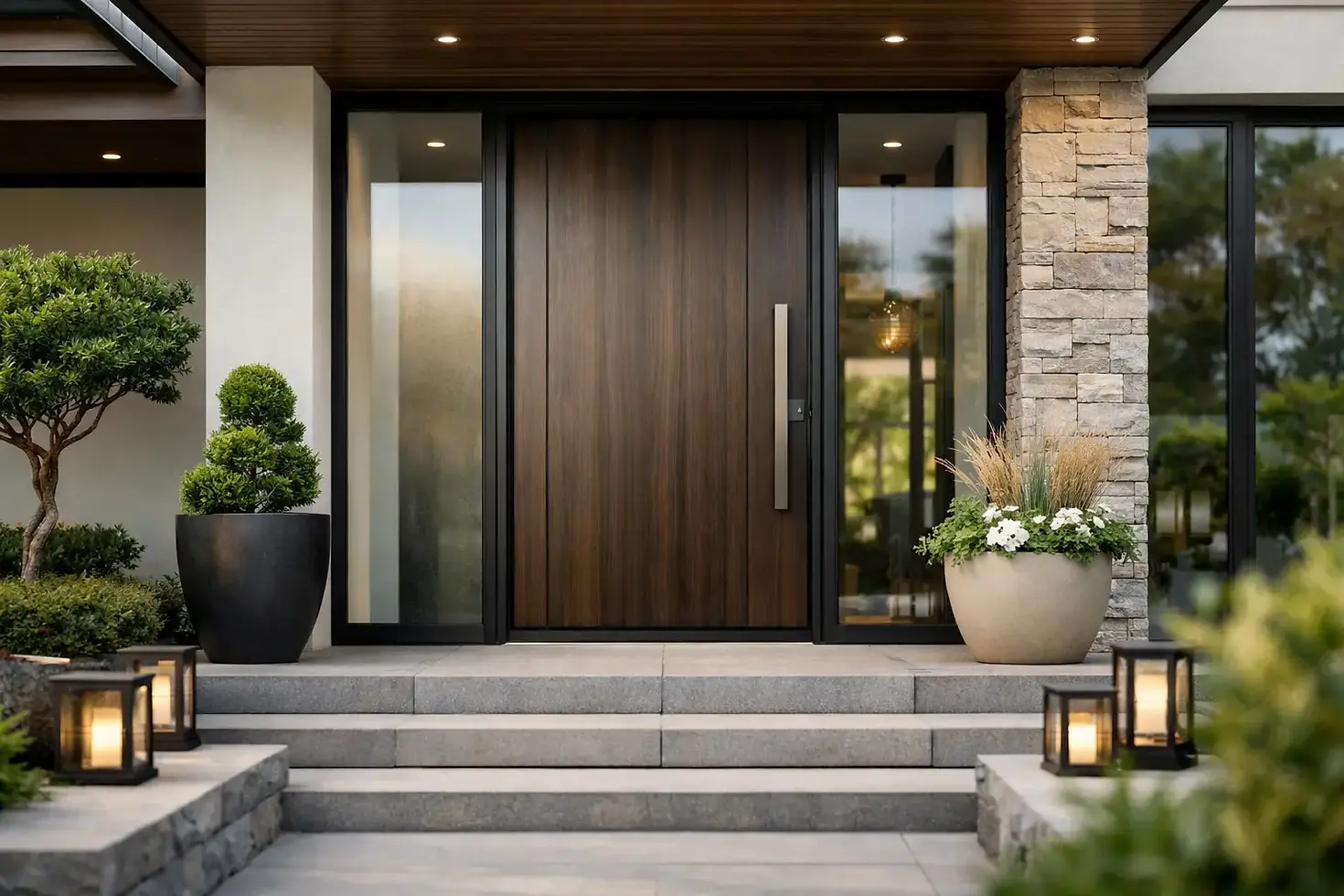
The right entrance door should belong to the architecture rather than compete with it. On a contemporary extension, a flush aluminium panel, deep colour and minimal visible hardware can create a crisp, considered elevation. For a period renovation or a home with industrial-inspired detailing, heritage-style aluminium doors can introduce slimmer framed divisions and a more characterful rhythm.
Colour has a significant effect. Anthracite grey and black remain popular for their architectural clarity, while bronze, muted greens and warmer neutral finishes can soften a modern façade. A contrasting interior colour may also work well, particularly where the hallway has a distinct material palette. The best choice is usually one that relates to the windows, roof glazing, cladding or metalwork elsewhere on the property.
Handles deserve more attention than they often receive. They are the one feature every visitor touches, so weight, finish and placement matter. A long pull handle can suit a tall statement door, whereas a compact lever handle may be more appropriate for a traditional proportion. Consider how the handle will sit alongside letter plates, house numbers, access-control devices and lighting so that the finished composition feels intentional.
Glazing can add both character and daylight. Narrow vertical vision panels are useful where privacy is important, while full-height sidelights can make a dark hallway feel dramatically more open. Obscure, textured or tinted glass can reduce direct views into the home without making the entrance feel closed off. The key is to decide where you want light, outlook and privacy before finalising the panel layout.
Size, opening style and daily usability
A dramatic oversized entrance door can be a defining feature of a self-build, but larger is not always better. A very wide or tall leaf is heavier, may require specialised hardware and needs enough clear space for comfortable opening. The same applies to pivot doors, which offer a striking architectural effect but demand careful planning around the pivot position, swing path and weather detailing.
For many homes, a conventional hinged door with a sidelight provides the best balance of impact and practicality. It delivers generous daylight and a sense of scale without requiring an excessively heavy door leaf. Double doors can also be excellent for wide entrances, though the meeting stile and everyday use of the inactive leaf should be considered.
Think about delivery days, family routines and furniture movement as well as the visual brief. A beautiful entrance should remain convenient when carrying shopping, welcoming guests or moving bulky items through the house.
Make the specification part of the project, not an afterthought
The strongest entrance door schemes are developed alongside the windows, glazing and external finishes. This allows sightlines, colours, cill details and junctions to be resolved as a coordinated whole. It also helps prevent late changes to opening sizes or floor levels that can limit the available door options.
At Cor-Line Systems, the Hurricane entrance door range is designed for projects where statement design needs to sit alongside dependable aluminium performance. The right configuration will still depend on the property, whether that is a sleek new-build, a carefully detailed extension or a contemporary intervention within a more traditional home.
Before placing an order, confirm the structural opening, finished floor levels, preferred opening direction, handle height, access requirements and any security or Building Regulations expectations. Share elevations and details of adjacent glazing where possible. These simple steps give a specialist supplier the information needed to recommend a door that looks resolved and performs as intended.
A premium entrance door should feel effortless once it is in place: reassuringly solid, easy to operate and entirely at home within the architecture. Give the specification the same attention as the door’s appearance, and it can set the standard for every arrival home.


Comments